2 Nov 2026 · Money · 4 min read
The 50/30/20 rule on an Indian salary
Split your salary into needs, wants and savings with one simple rule, with a real ₹40,000 example and how to adjust it for city rent.
By Kaushik Tank
Salary comes on the 1st. By the 20th, you're checking your balance before ordering food. If that sounds familiar, the problem is usually not your salary. It's that your money has no plan before it arrives.
The 50/30/20 rule is the simplest plan you can start with this month.
What the rule says
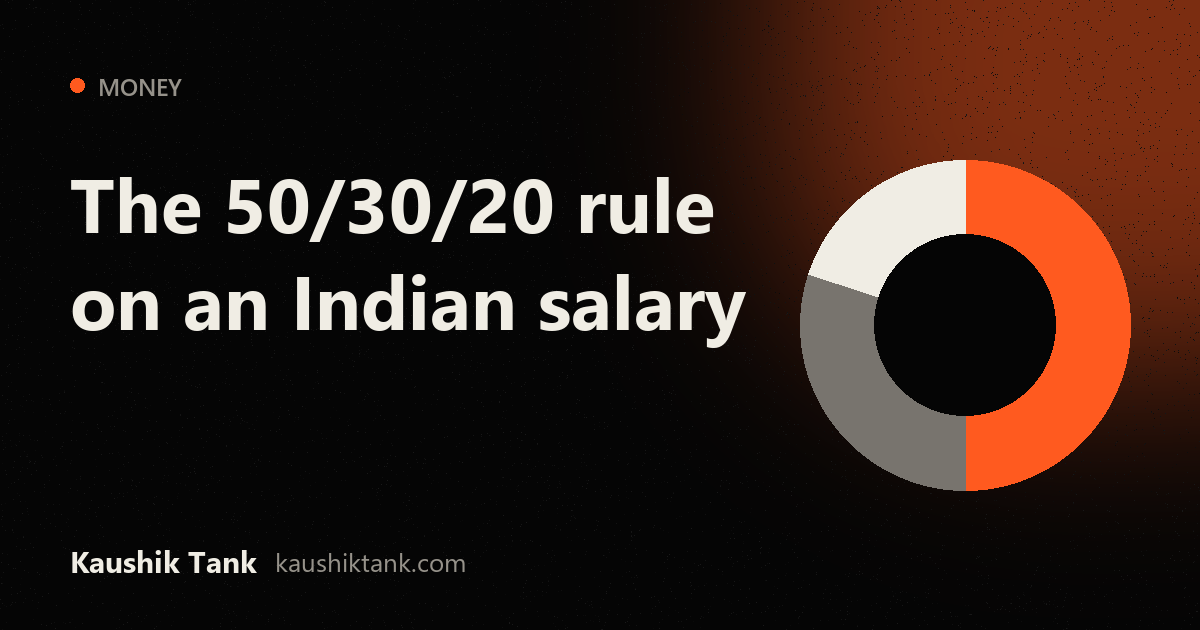
Split your take-home salary into three parts:
- 50% for needs. Rent, groceries, bills, EMIs, travel to work.
- 30% for wants. Eating out, shopping, trips, subscriptions.
- 20% for savings. SIPs, emergency fund, paying off extra debt.
That's it. No app, no spreadsheet with 40 categories.
What it looks like on a real salary
Say you take home ₹40,000 a month.
| Bucket | Share | Amount |
|---|---|---|
| Needs | 50% | ₹20,000 |
| Wants | 30% | ₹12,000 |
| Savings | 20% | ₹8,000 |
Eight thousand a month into savings, done every month, adds up to ₹96,000 a year before any growth. Put it in a SIP and it starts working for you.
The trick most people miss: save first
Don't wait to "save whatever is left". Nothing is ever left. Set up your SIP or a recurring transfer for the 1st or 2nd of the month, the day salary lands. The 20% leaves your account before you can spend it.
Then you spend the rest without guilt. That's the real benefit of this rule. You stop feeling bad about every coffee because your savings are already handled.
When 50/30/20 doesn't fit
In big cities, rent alone can eat 40% of your salary. That's fine. The rule is a starting point, not a law. A few honest adjustments:
- Needs are too high? Try 60/20/20. Cut wants before you cut savings.
- Paying off a loan? Put extra into the 20% until the loan is gone. Credit card debt first, always.
- Living with parents? You can probably do 30/30/40 and build savings much faster. Use that window.
Start with one month
Don't try to be perfect. For one month, just track which bucket each spend belongs to. Most people find their "wants" are much bigger than they thought, and that's exactly where your savings are hiding.
Once your savings bucket is running, see how far it can go with the SIP calculator, or check if you're on the path to financial freedom with the FIRE calculator.
A budget isn't about spending less. It's about deciding where your money goes before life decides for you.